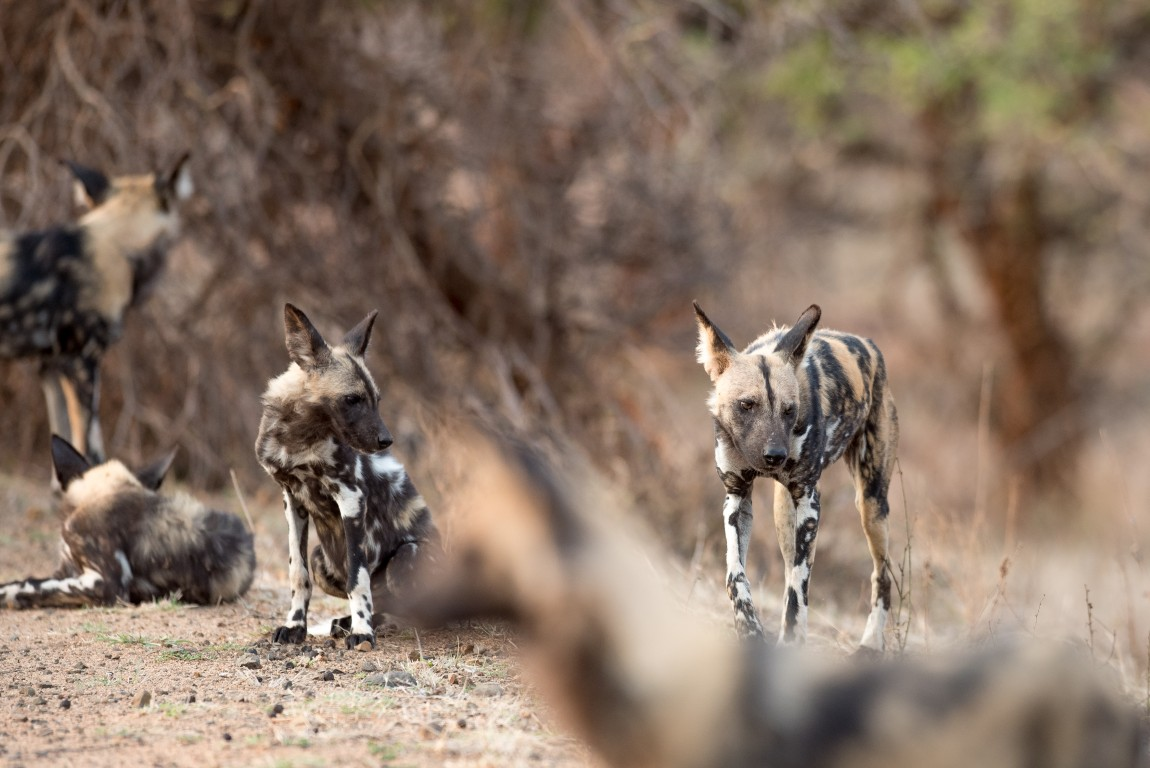
Cheetahs and African wild dogs are the two predators most Kruger visitors hope for and fewest actually see. Both are rare, both cover huge distances, and both are pushed around by lions and hyenas. That does not make a sighting pure luck. If you know which habitats they use, when they are active and how to scan for them, you can put yourself in the right places at the right hours. This guide covers where and when to look, how each species behaves, how many there are, and how to watch them without causing harm.
Why They Are So Hard to Find
The numbers explain most of it. The most recent completed photographic census, in 2021/22, estimated about 116 cheetahs in Kruger, and the Endangered Wildlife Trust (EWT) puts the park's wild dogs at roughly 250 to 350 animals, up from a low of about 120 in 2009. Spread across a park of almost two million hectares, that is very few animals. Our post on Kruger's animal population numbers explains where these estimates come from and why the cheetah figure should not be read as proof of a collapse.
Both species also sit low in the predator pecking order. Lions and spotted hyenas steal their kills and kill their young, so cheetahs and wild dogs avoid them in space and time. Research on carnivores in Africa has found that cheetahs make most of their kills in full daylight and wild dogs hunt mainly around dawn and dusk, timing that helps them avoid lions and hyenas, which do much of their hunting at night.
Cheetahs: Habitat and Where to Look
The classic image of a cheetah on a bare grass plain only half fits Kruger, which is far more wooded than the Serengeti. A radio-tracking study in the south of the park found that Kruger's cheetahs used all habitats, but their home ranges were centred on open savanna, especially open marula and knobthorn country bordered by woodland. They use the cover to stalk and the open ground to chase. Males, often in coalitions of two or three, frequently brothers, spend more time in the open, while females with cubs keep closer to thicker bush and drainage lines, where impala are common and lions are easier to avoid.
In practice, two broad areas stand out for visitors:
- The south-east, between Lower Sabie and Crocodile Bridge. Flat basalt plains with knobthorn and marula, short grass and good herds of impala, zebra and wildebeest. Our guides to the best routes in the south and a Lower Sabie and Crocodile Bridge day cover this country road by road.
- The central plains around Satara and Tshokwane. The open basalt grasslands of the central region are Kruger's best-known cat country. See best predator routes from Satara.
The 2008/09 census found most of the park's cheetahs in the southern and central regions, with too few records in the north to model a figure. Sightings north of the Olifants River are possible but much less likely.
Road note: the January 2026 floods and later spells of heavy rain have damaged gravel roads across the park. SANParks' road closure register of 11 August 2026 listed several gravel roads around Crocodile Bridge, Lower Sabie and Satara as closed or partly closed. Check the current register before you plan a route, and never drive past a closure sign.
Cheetahs: When to Look
Cheetahs are active by day. The Cheetah Conservation Fund says they most often hunt between about 06:00 and 10:00 and again between 16:00 and 18:00, avoiding both the midday heat and the night, when kills are more likely to be stolen. Be at the gate when it opens, spend the first hours on open plains, and be back in open country for the late afternoon. Our gate times guide explains the seasonal schedule.
Season matters too. In the dry winter months, roughly May to September, grass is short and the bush thins out, so a cheetah lying in the open is much easier to see. In the green summer season the grass grows tall and a resting cheetah can disappear completely, although sightings still happen. Our seasonal highlights page shows what changes month by month.
How to Spot a Cheetah
- Scan, do not just drive. On open plains, stop at spots with a long view, switch off and sweep the grass slowly with binoculars. A cheetah's head and rounded ears above the grass are often all you will see.
- Check termite mounds and other raised points. Cheetahs often sit on termite mounds or fallen trees to look for prey and danger. A shape on a mound is always worth a second look.
- Watch the prey. Impala or zebra standing still and all staring in one direction, or a sudden scatter, often means a predator. Unlike a leopard, a cheetah is usually on the ground, so follow the stare out across the grass, not up into the trees.
- Look in the shade at midday. After a morning hunt, a cheetah may rest under a bush or a lone tree on the plain for hours.
Wild Dogs: Habitat and Movement
Wild dogs, also called painted wolves, live in packs that can range from a few animals to about 30. A pack's home range is typically 200 to 1,000 km², and dogs can cover long distances in a day, often trotting along roads and drainage lines. That is the main reason they are so unpredictable: a pack seen at one spot this morning may be many kilometres away tomorrow, and nobody can tell you where it will be.
They are not tied to open plains the way cheetahs are. Packs hunt mainly impala in mixed woodland and bushveld, and the southern half of the park holds most of them. The 2008/09 census found 89 of the 136 dogs it could assign to a region in the south, and a sightings analysis for June 2021 to May 2022 recorded over 1,000 reports from the south against about 170 from the central region and about 70 from the north. Sightings are regularly reported in the bushveld around Skukuza, Pretoriuskop and Berg-en-Dal and on the plains towards Lower Sabie and Crocodile Bridge, but no road is reliable for long.
Wild Dogs: When to Look
Dogs are most active early. The same sightings analysis found a clear peak in the early morning, roughly from first light to about 09:00, in every season, plus a smaller late afternoon peak outside summer. In the heat of the day the pack usually lies up in shade, often flat out and hard to see. Cool, overcast days can keep them moving for longer, as our post on weather and animal behaviour explains.
Denning season changes the picture for a few months. Wild dogs breed once a year, and the EWT describes them settling down to den during the winter months, roughly May to August, with the end varying between packs and sometimes running into September. While there are pups, the pack returns to the den every day and moves less widely, so sightings in that area become more frequent. Pups start travelling with the pack at roughly two and a half to three months old, and the pack is mobile again.
Typical Wild Dog Behaviour
- The greeting ceremony. Before setting off to hunt, the pack often gathers in an excited ritual of twittering calls, licking and muzzle-to-muzzle contact. If resting dogs suddenly get up and start greeting, a hunt may be about to begin.
- Fast, purposeful travel. Hunting dogs trot in a loose line with ears up, then accelerate. Chases can run for several kilometres.
- Quick drinks. Dogs drink briefly and move on. For what to expect at water, see hyenas and wild dogs at waterholes.
General Areas at a Glance
These are broad regions and habitats only, not specific sites. Both species move constantly, so treat them as starting points.
| General area | Habitat | Cheetah | Wild dog |
|---|---|---|---|
| South-east (Lower Sabie to Crocodile Bridge) | Open basalt plains, knobthorn and marula savanna | Good chances | Regularly reported |
| Southern bushveld (Skukuza, Pretoriuskop, Berg-en-Dal) | Mixed woodland, granite hills, drainage lines | Occasional | Good chances |
| Central plains (Satara, Tshokwane) | Open grassland and savanna | Good chances | Occasional |
| North (north of the Olifants River) | Mopane woodland and shrubland | Rare | Rare |
Use our route planner to build a drive through these habitats, and the camps guide to choose a base: Lower Sabie, Crocodile Bridge and Satara put you closest to the open plains.
Ethics: Dens, Roads and Sharing
Both species are threatened. Wild dogs are listed as Endangered and cheetahs as Vulnerable, and both face snares and disease, especially when they range beyond the park boundary. How you behave around them matters more than with common animals.
Never share or seek den locations. A wild dog den, or a cheetah mother hiding young cubs, can be abandoned if vehicles pile up. Do not post den sites on social media or in chat groups, do not ask other visitors where the den is, and do not linger if you realise you have found one. Our guide to the ethics of sharing sightings explains how to share responsibly after you have left.
Do not block them on the road. Wild dogs often travel and hunt along roads. Stop on the side, keep the other lane open and let the pack pass. Never chase running dogs, never cut in front of a hunt and never position your car between a cheetah and its prey. A failed hunt costs these predators energy they cannot easily replace. The basics are in sighting traffic etiquette and the park rules.
Keep it short. Switch off, stay inside your vehicle and give the next car a turn. If the animal changes its behaviour because of you, you are too close.
Help the Researchers: Submit Your Photos
Kruger's cheetah and wild dog numbers come largely from visitors. Since the late 1980s, photographic censuses have been run every few years, today by the EWT and SANParks, and researchers identify each animal by its unique coat pattern. The current Greater Kruger Cheetah Census runs from 1 September 2026 to 31 August 2027.
If you see a cheetah during that period, photograph it from a respectful distance, ideally showing both its left and right sides, and do not pressure the animal for a better picture. Submit the photos through the EWT's census page with the date, the location (GPS position, road number or nearest landmark) and the number of cheetahs. That information goes privately to the researchers, which is very different from posting a live location publicly. The EWT also asks people to report wild dog sightings, especially outside protected areas, where packs face snares and disease.
Frequently Asked Questions
Where is the best place to see cheetahs in Kruger? The open plains of the south-east, between Lower Sabie and Crocodile Bridge, and the central plains around Satara and Tshokwane give you the best chances. Kruger's cheetahs prefer open savanna but also use woodland, so keep scanning in mixed country too.
What time of day are cheetahs most active? Cheetahs are daytime hunters. They hunt most often in the early morning and late afternoon and usually rest in the shade at midday.
When is wild dog denning season in Kruger? Roughly May to August, sometimes into September, depending on the pack. Packs move less widely while pups are at the den, but den locations should never be shared or sought out.
How many wild dogs and cheetahs are there in Kruger? The EWT estimates roughly 250 to 350 wild dogs. The 2021/22 census estimated about 116 cheetahs, a figure researchers say was affected by fewer visitor photos during COVID-19 and a new identification method.
Is winter or summer better for cheetahs and wild dogs? The dry winter months are generally better. Short grass and thin bush make both species easier to see, and wild dogs are denning, so packs are more settled for a few months.