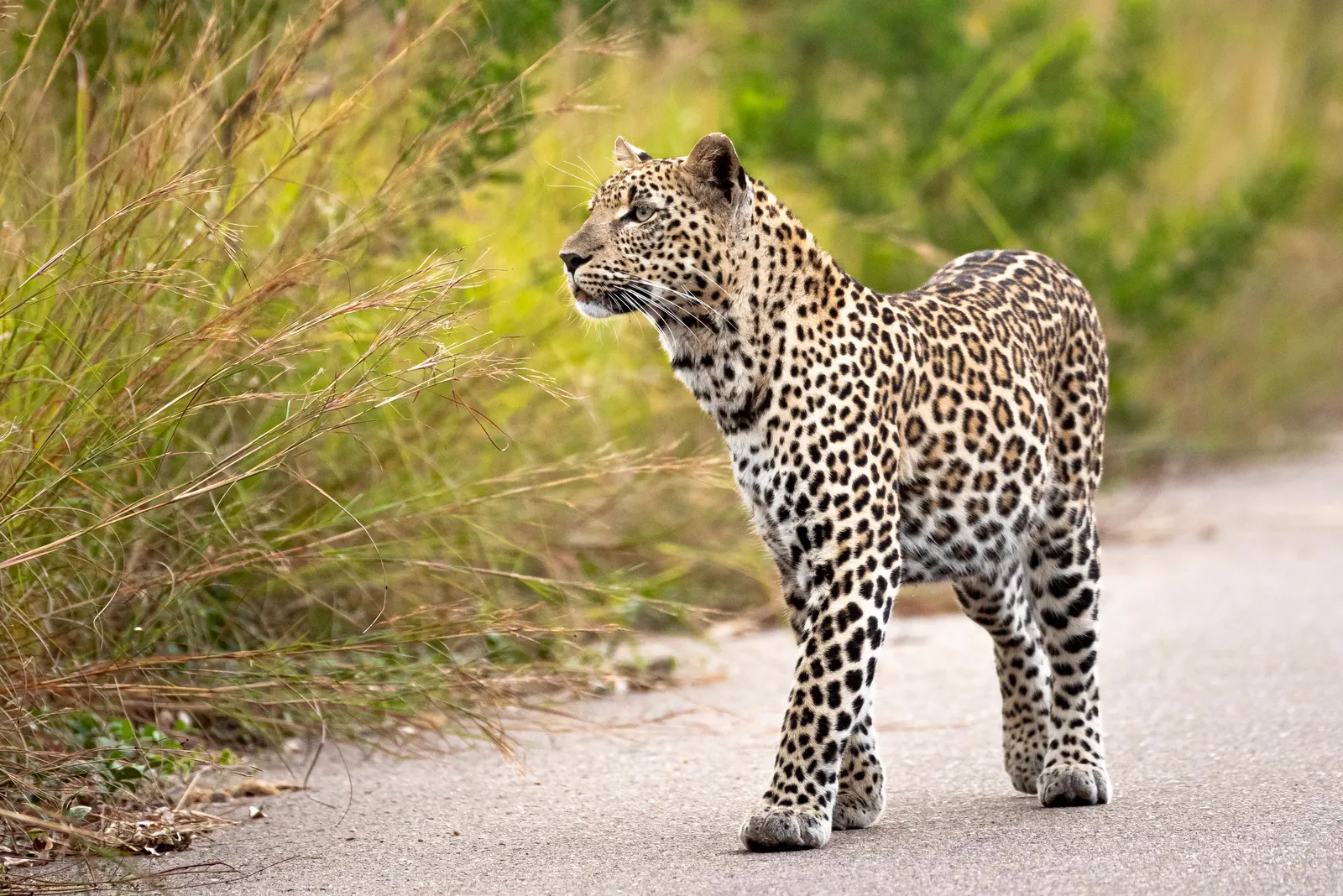
Leopards are the most elusive of the Big Five in Kruger National Park, but on a self-drive you can tilt the odds in your favour by understanding how they live: where they rest, when they move and which signals give them away. This guide covers leopard behaviour, the areas where they are regularly reported, how to scan the bush, how to behave at a sighting and how to photograph one.
Why Leopards Are So Hard to Find
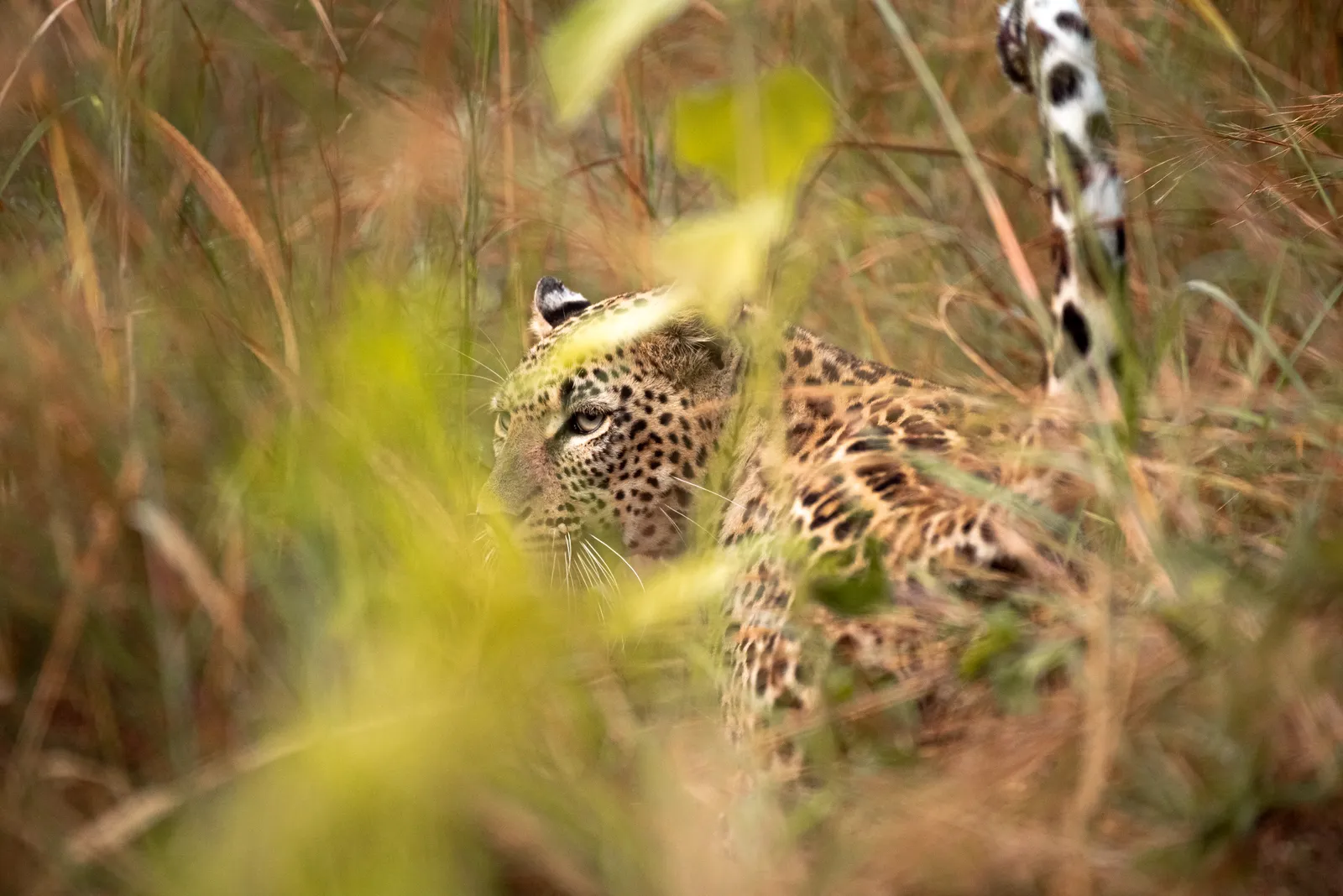
Lions are often seen resting in the open in prides, but leopards live very differently. They are solitary animals, and apart from mothers with cubs or a mating pair, you will almost always find a leopard on its own. Their rosette-patterned coat breaks up their outline in dappled shade, long grass and tree branches so effectively that a leopard lying ten metres from the road can go unnoticed by several passing cars.
Leopards are also largely nocturnal. They do most of their hunting and travelling between dusk and dawn, relying on excellent night vision and hearing, and spend much of the day resting out of sight. Daytime sightings do happen, especially in the early morning and late afternoon, but a leopard that does not want to be seen usually is not.
The good news is that leopards are territorial. Adults of both sexes hold home ranges that they mark with urine, scrapes and droppings and defend against rivals of the same sex, and male ranges are generally larger than female ranges. A leopard seen on a particular stretch of river is therefore likely to be living there, and the same area is worth checking again on another drive. For more on how leopards compare to the other big animals, see our Big 5 guide.
Look Up: Trees, Kills and Lookouts
Leopards are powerful climbers, and trees play a central role in their lives. They rest on sturdy horizontal branches during the heat of the day, use them as lookouts, and often hoist their kills out of reach of other predators. Large riverine trees such as Jackalberry, Sycamore Fig, Sausage and Marula trees are classic leopard trees, because they offer thick, shady branches and good cover.
Hoisting kills is one of the leopard's best known habits, and it is also one of your best clues. A long-term study by the wild cat conservation organisation Panthera in the Sabi Sands, the private reserve on Kruger's western border, found that leopards hoisted a little over half of their kills. They tended to hoist prey weighing roughly 40 to 140 percent of their own body mass, since smaller kills can be eaten at once and very large ones are too heavy to lift. In the same study leopards lost about one in five kills to other carnivores, with spotted hyenas responsible for around half of those thefts and other leopards being the next biggest thieves.
For spotters this has a practical consequence. An impala carcass draped over a branch means the leopard is rarely far away. It may be resting in the same tree, lying in the shade at its base or in thick bush nearby, and it will often return to feed, sometimes over a day or more. If you find a kill in a tree with no cat in sight, it can be worth waiting or returning later in the day.
When you scan, do not only look at the undergrowth. Work along the lower and middle branches of large trees, check the forks where a cat can lie stretched out, and look for the classic giveaway: a long tail with a white-tipped end hanging straight down below a branch. Leopards also use termite mounds, rocky outcrops and fallen trees as lookout points, so give those a second glance too.
Where Leopards Are Regularly Reported in Kruger
Leopards occur throughout Kruger, but some habitats suit them better than others. They favour dense riverine bush, where big trees, thick cover and plenty of prey such as impala come together, and rocky koppies, where mothers can hide cubs among the boulders. The roads that follow rivers are therefore the best place to start.
In the south, the H4-1 between Skukuza and Lower Sabie, which runs along the Sabie River, has a long reputation as one of the most productive leopard roads in the park, including the stretch around Nkuhlu Picnic Site. The S3, which follows the Sabie River upstream from Skukuza, and the area around the Sand River, including the H12 Sand River bridge near Skukuza, are also worth driving slowly. Visitors often report that these southern river roads are especially productive in the dry winter months, when animals stay closer to permanent water.
Further afield, leopards are regularly reported on the granite outcrops between Pretoriuskop and Berg-en-Dal, in the big trees around Tshokwane Picnic Site, along the S100 near Satara, on the river roads along the Olifants and Letaba rivers, and on roads near Shingwedzi in the north. None of these places guarantees a sighting, and leopards move, but they give you a sensible starting point. Our best routes in the south and the route planner can help you build a drive around these river roads.
Best Times of Day and Season
Because leopards are most active from dusk to dawn, the first and last hours of the day are your best chance on a self-drive. Try to be at the gate when it opens, so you are on a river road while the light is still soft and cats may still be moving or settling into a resting spot. In the late afternoon, leopards often become active again as temperatures drop, so plan to be in good habitat during the last hour before you need to head back. Always leave enough time to reach camp before the gates close; our gate times guide explains the seasonal schedule.
During the middle of the day, leopards usually rest. This is the time to drive slowly along riverbeds and scan trees carefully rather than expecting to see a cat walking along the road. Cool, overcast or windy days can also be good, as leopards may stay active for longer in mild weather.
Season matters too. In the dry winter months, roughly May to September, the vegetation thins out, grass is shorter and animals gather near rivers and waterholes, which makes spotting much easier. In the green summer season the bush is thick and lush, prey is more spread out and a leopard in a leafy tree is far harder to see, although sightings still happen. Our article on weather and animal behaviour goes into more detail.
Listen to the Bush: Alarm Calls and Other Clues
Leopards are quiet, but the animals around them are not. Learning a few alarm calls can lead you straight to a cat you would never have spotted by eye. The most useful ones come from larger animals, because they only call when a real threat is around.
Baboons give loud, harsh alarm barks, and a whole troop barking and fleeing into trees is a strong sign of a leopard or lion nearby. Kudu produce a deep, powerful alarm bark, one of the loudest calls of any antelope. Impala make an explosive snort when they sense a predator, often while staring fixedly in one direction. Vervet monkeys chatter sharply, and francolins and spurfowl give loud, agitated calls from the ground. Tree squirrels chatter and scold too, but they alarm at almost anything, including snakes and birds of prey, so treat their calls as a hint rather than proof.
If you hear repeated alarm calls from one direction, stop, switch off your engine and watch where the alarming animals are looking. Then scan the tree line and the ground in that direction. Leopards also have their own call, a rasping, repeated cough often compared to sawing wood, which they use to advertise their presence. You are most likely to hear it at night from camp.
Other clues include vultures sitting in a tree rather than circling, a tense group of impala all facing the same way, fresh tracks in the sand of a riverbed or road verge, and stationary cars with people peering into one tree. If you approach a sighting, follow the guidance in our sighting traffic etiquette article.
Patience and Etiquette at a Leopard Sighting
Leopard sightings reward patience. A cat resting high in a tree may not move for hours, while a leopard in thick bush might only show itself for a moment before disappearing. If you find a likely tree or a kill, consider parking at a respectful distance and waiting, rather than driving back and forth. Switch off your engine, keep your voices low and stay inside your vehicle at all times, as the park rules require.
Leopards are easily disturbed, especially mothers with cubs or a cat on a fresh kill. Give the animal space, never block its path across the road, and do not try to attract its attention with noise. At popular sightings, take your turn, keep the road clear for other vehicles and move on after a reasonable time so others can enjoy it too. Before you tell anyone where you saw a leopard, read our thoughts on ethics of sharing sightings: a cat with young cubs or one that keeps crossing a busy road can suffer from too much traffic.
Photographing Leopards
Leopards are among the most rewarding animals to photograph, but conditions are often difficult: dappled light, branches in front of the face and an animal half hidden in shade. A telephoto lens in the 300 to 600 mm range is very useful, and a beanbag on the window frame gives a far steadier platform than holding the camera by hand. Turn off your engine before shooting to avoid vibration.
Focus on the eyes, and use a continuous or tracking focus mode if the cat starts moving. In shade or low light, raise your ISO rather than letting the shutter speed drop too low. If the leopard is resting, be patient: the best images often come when it lifts its head, yawns, stretches or climbs down. For more general advice, see our guide to photographing wildlife.
Night Drives: Seeing Leopards After Dark
Self-drivers must be back in camp before the gates close, so the hours when leopards are most active are off limits on your own. The legal way to explore after dark is a guided sunset or night drive run by SANParks from many rest camps. A ranger drives an open vehicle and uses spotlights responsibly, which gives you a real chance of seeing nocturnal animals, occasionally including leopards. Nothing is guaranteed, but a night drive in good leopard country, such as from Skukuza or Lower Sabie, is a worthwhile addition to any trip. Book early, as places are limited, and read our article on night drives after dark for what to expect.
Leopard Spotting Checklist
- Leave camp at gate opening and be back in leopard habitat for the last hour before closing.
- Drive slowly, around 20 to 30 km/h, on river roads such as the H4-1 and S3.
- Scan large trees branch by branch and look for hanging tails.
- Check rocky outcrops, termite mounds and the shade at the base of big trees.
- Listen for baboon, kudu and impala alarm calls, then stop and look where they look.
- Look for kills in trees and vultures perched nearby.
- Bring binoculars, a telephoto lens and a beanbag.
- Stay in your vehicle, keep noise down and give the leopard space.
FAQ
Where is the best place to see leopards in Kruger? The southern river roads, especially the H4-1 between Skukuza and Lower Sabie and the roads along the Sabie and Sand rivers, are well known for leopard sightings. Leopards live throughout the park, though, and are also regularly reported around rocky outcrops and along other major rivers.
What time of day are leopards most active? Leopards are mostly active from dusk to dawn. On a self-drive, the first hours after gate opening and the last hours before gate closing give you the best chance.
Is winter or summer better for seeing leopards? The dry winter months are generally easier, because the vegetation is thinner and animals concentrate near water. In summer the bush is dense, which makes leopards harder to spot.
Can I see leopards on a night drive? Yes, it is possible. SANParks guided night drives use spotlights and visit areas you cannot reach after gate closing, and leopards are among the animals sometimes seen. Sightings are never guaranteed.
Is Sabi Sands better than Kruger for leopards? The private Sabi Sands reserve is famous for leopards that are habituated to vehicles and for off-road tracking by guides, which self-drivers in Kruger cannot do. Kruger offers good leopard country at a lower cost if you are patient. Our Kruger vs Sabi Sand comparison explains the differences.