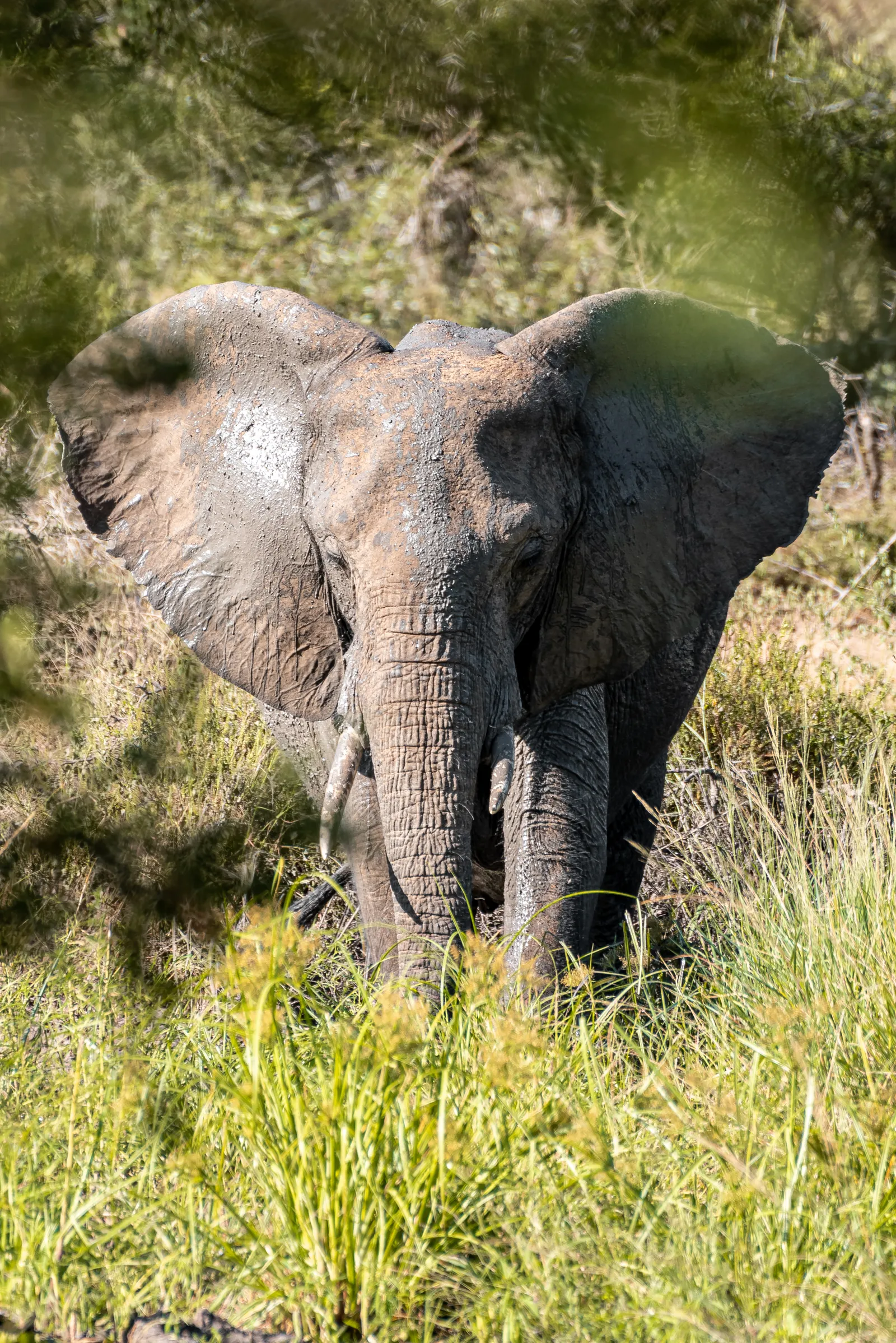
Elephants are usually calm, but a stressed breeding herd or a bull in musth can turn dangerous fast. This guide shows you how to read elephant body language from your car, tell a bluff from a real threat, and handle roadblocks, waterholes and narrow roads safely on a Kruger self-drive.
Why Elephants Matter in Kruger
Kruger has one of the largest elephant populations in Africa. A 2024 study by SANParks scientists, which corrected the 2020 aerial survey for sampling error, estimated about 31,000 elephants in the park in 2020 (95% range roughly 28,500 to 34,200), with the population growing by about 5% a year since 2013. In practice that means you will almost certainly meet elephants on your trip, often at close range and often on the road itself.
They are also the park's great "ecosystem engineers". By pushing over trees, stripping bark and digging for water in dry riverbeds, they open up woodland and create water points that many other animals use. That same strength is why every self-driver should understand how they behave. For the natural history and the best areas to find them, see our Big 5 guide.
Who You Are Looking At: Herds and Bulls
Reading an elephant starts with knowing what kind of group it belongs to, because the risk is not the same.
Breeding herds are family groups of related females and their young, led by the matriarch, usually the oldest and most experienced cow. She decides where the group goes, when it drinks and how it reacts to threats. The whole herd takes its cue from her: if she is relaxed, the others usually are too; if she turns to face you with her head up, the mood can change in seconds. Breeding herds are the most protective groups you will meet, because they have calves to defend.
Young males stay with their family until adolescence, typically leaving somewhere between 10 and 15 years old as they become more independent and less welcome among the adult females. They often spend time near the edge of the herd before going their own way.
Bulls live outside the breeding herds, either alone or in loose "bachelor groups" of males. Mature bulls are often surprisingly tolerant of vehicles, but they are huge, and the exception is a bull in musth (more on that below). Young bulls are the ones most likely to put on a noisy show: shaking their heads, flaring their ears and trotting at cars. Usually this is bluff, but it should still be treated as a warning.
Relaxed vs Stressed: Reading Body Language
Elephants communicate constantly with their ears, head, trunk and feet. You do not need to be an expert, but you do need to notice when the picture changes.
A relaxed elephant moves slowly and deliberately. It feeds, dusts itself, drinks or dozes in the shade. Its ears flap gently and rhythmically, mainly to cool down, since the ears are full of blood vessels and act like radiators. Calves wander and play a little away from their mothers. If the herd ignores your car and keeps feeding, you are at a comfortable distance.
A stressed or uneasy elephant shows a different set of signals:
- Stopping and staring at your vehicle, often with the head raised.
- Ears spread wide to look bigger, sometimes with a sudden snap or flap.
- Head shaking, which can make the ears slap loudly against the head.
- Trunk raised or swinging to test the air for scent.
- Swinging a front foot, kicking dust or breaking branches, which is often displacement behaviour from an animal that is unsure what to do next.
- Calves pulled close to the adults, or the herd bunching together.
- Trumpeting, rumbling or a loud growl.
Many of these signs mean the same thing: "You are too close, or you are in my way." The right response is almost always to give more space, calmly and early.
Mock Charge vs Real Charge
A mock charge is a display meant to make you leave. The elephant runs at you with its head high, ears spread wide, often trumpeting and kicking up dust, then stops short, swings away or stands its ground. It is loud and frightening, which is the point. Young bulls and nervous cows in breeding herds do it most often.
A real charge usually looks different. The elephant tends to pin its ears back, lower its head and curl or tuck its trunk out of the way, and it often comes on fast and with little noise. This is an animal committed to making contact.
Be careful with this distinction. Field guides describe these patterns, but they are general tendencies, not a reliable test, and an elephant can switch from display to attack. Treat every charge as potentially real: if you can move away safely, do it. The goal is never to be close enough that the difference matters.
The Musth Bull
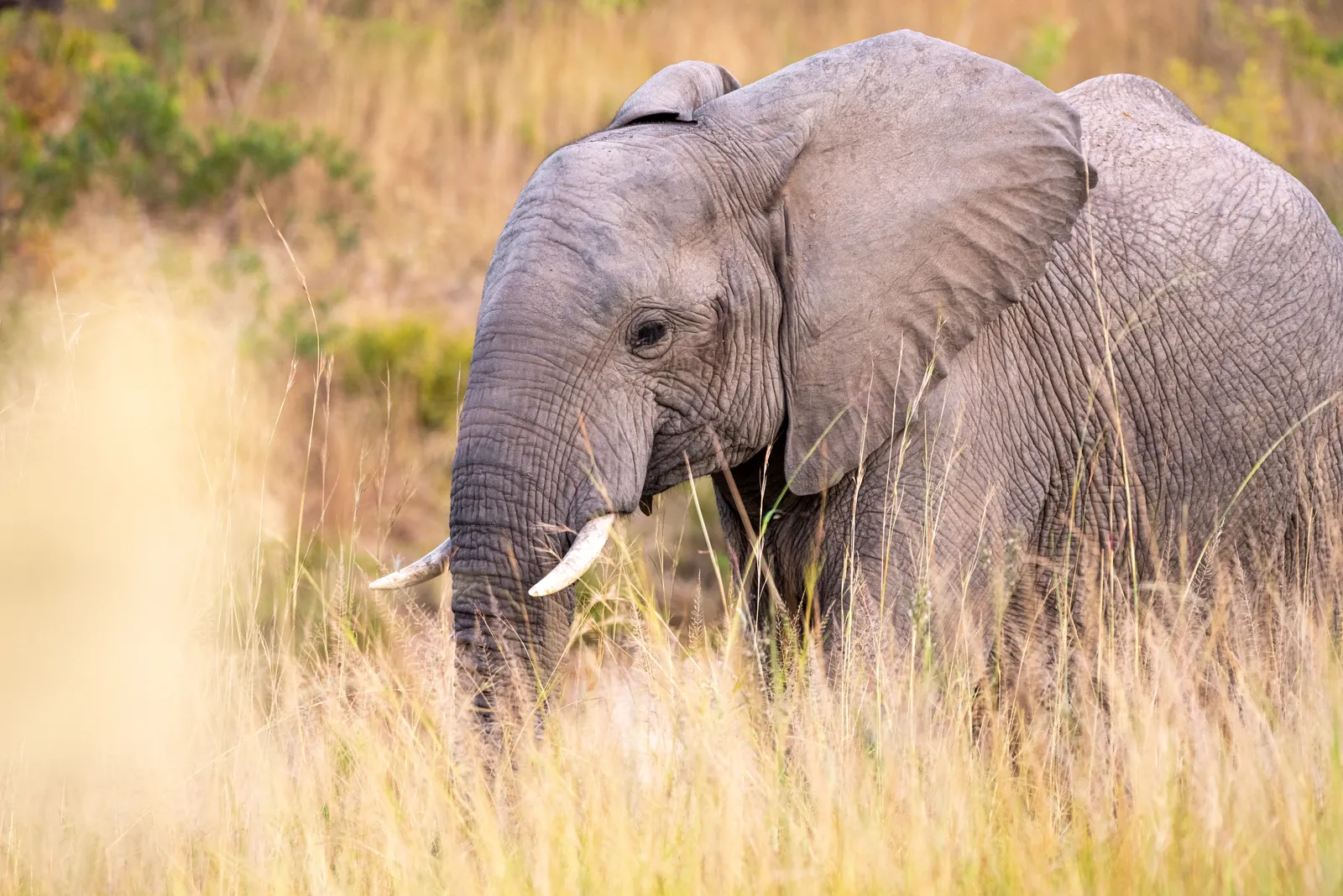
Musth is a periodic state in mature bulls, linked to a sharp rise in reproductive hormones. Bulls in musth search for receptive females, challenge rival males and can be unusually aggressive and unpredictable, including towards vehicles.
Signs of musth:
- Temporal gland secretion: a dark, wet streak running down the side of the face from the gland between the eye and the ear. On its own this is not proof, because cows and younger elephants can secrete from this gland too when stressed or excited.
- Constant urine dribbling, which often stains the inside of the hind legs and has a strong smell.
- A swaggering, head-high walk, sometimes with the ears held high and the head tossed.
When both secretion and urine dribbling are visible on a big bull, assume he is in musth. Musth is not a short mood: in the long-term study of Amboseli elephants in Kenya, each bull came into musth roughly once a year, and individual periods lasted anything from a day or two to around five months, depending on age, condition and competition.
What to do: keep a very wide berth, do not follow him, and never block his path or the road he is walking down. If he is coming towards you, quietly reverse or turn away well before he gets close.
What to Do in the Car, Step by Step
Most elephant encounters in Kruger are peaceful and wonderful. These habits keep them that way.
- Stop early and keep your distance. When you see elephants near the road, stop well back. There is no single official distance, but a good rule of thumb is to give breeding herds at least 50 metres and more if anyone looks tense. Let the elephants decide how close they come, never you.
- Always keep an escape route. Before you stop, check that you can drive away forwards or reverse without being boxed in by other cars, a ditch or more elephants. Leave a gap to the car in front.
- Never get between a mother and her calf, or between a herd and the group it is crossing to join. If elephants are on both sides of the road, wait at a distance until they have crossed.
- Engine: quiet, not off-limits. With relaxed elephants at a comfortable distance, switching off can be pleasant and keeps the noise down. When elephants are close, approaching or showing any stress, keep the engine running so you can move away smoothly. Either way, never rev the engine, hoot or flash lights: elephants can take noise as a challenge.
- Stay inside, stay quiet. Keep all body parts inside the vehicle, talk softly and avoid sudden movements. Getting out of your car outside designated areas is not allowed in Kruger.
- If an elephant shows stress, leave calmly. Do not wait to see if it calms down. Move away slowly at the first clear warning, ideally before it starts walking towards you.
- If it keeps coming, keep going. Drive or reverse away steadily and keep watching it. Do not try to "stand your ground" with a vehicle.
Roadblocks and Narrow Roads
Elephants often use tar and gravel roads as easy walkways, and a herd can take a long time to cross or move off. Patience is the only safe option. Stop well back, give them the whole road and wait. Do not creep forward to "encourage" them, and do not try to squeeze past a herd on the verge.
Narrow gravel roads and bridges need extra care, because there is little room to turn. If you meet an elephant coming towards you on a narrow stretch, stop early and reverse to a wider spot if it keeps approaching. Do not drive into a narrow section if you can already see elephants on or near the road ahead. Our dirt roads guide has more on driving the S-roads.
Bulls on the road are common. A relaxed bull feeding beside the road may let you pass slowly if he is clearly paying no attention to you. If he faces you, shakes his head or walks towards you, back off and give him time.
Elephants at Waterholes
Waterholes are among the best places to watch elephants, especially in the dry season and the midday heat. Herds often arrive at speed, eager to drink, and the calves can be playful and distracting. A few points help:
- Park where you will not be in their path. Elephants usually walk in along established trails. Do not park across a trail or between the water and the bush they came from.
- Watch for new arrivals. A second herd coming in, or a bull arriving, can shift the mood quickly and push animals towards the road.
- Leave room for other cars and do not crowd the best spot. Our sighting traffic etiquette guide covers how to share busy sightings.
Quick Checklist
- Stop early, well back from breeding herds.
- Keep an escape route open at all times.
- Never come between a cow and her calf.
- No revving, hooting or flashing lights.
- Engine running if elephants are close or uneasy.
- Leave at the first clear sign of stress.
- Give musth bulls a very wide berth and never block their path.
- Wait out roadblocks with patience.
Frequently Asked Questions
Are elephants in Kruger dangerous? Most encounters are calm, and elephants generally ignore cars driven considerately. Problems usually start when people get too close, block an elephant's path or stay after clear warning signs. Keeping distance and an escape route removes most of the risk.
Should I switch off my engine near elephants? With relaxed elephants at a comfortable distance it is fine and quieter. If elephants are close, approaching or stressed, keep it running so you can leave calmly, but never rev it.
How can I tell if a bull is in musth? Look for a dark streak of secretion down the side of the face together with constant urine dribbling and a swaggering walk. If you see these signs, keep well away and do not block his route.
What should I do if an elephant mock charges my car? Stay calm, do not hoot or rev, and move away slowly if you can do so safely. Treat it as a final warning, not as a show to film from closer.
What if something goes wrong? Save the park's emergency numbers before your trip. You can find them on our emergency page.