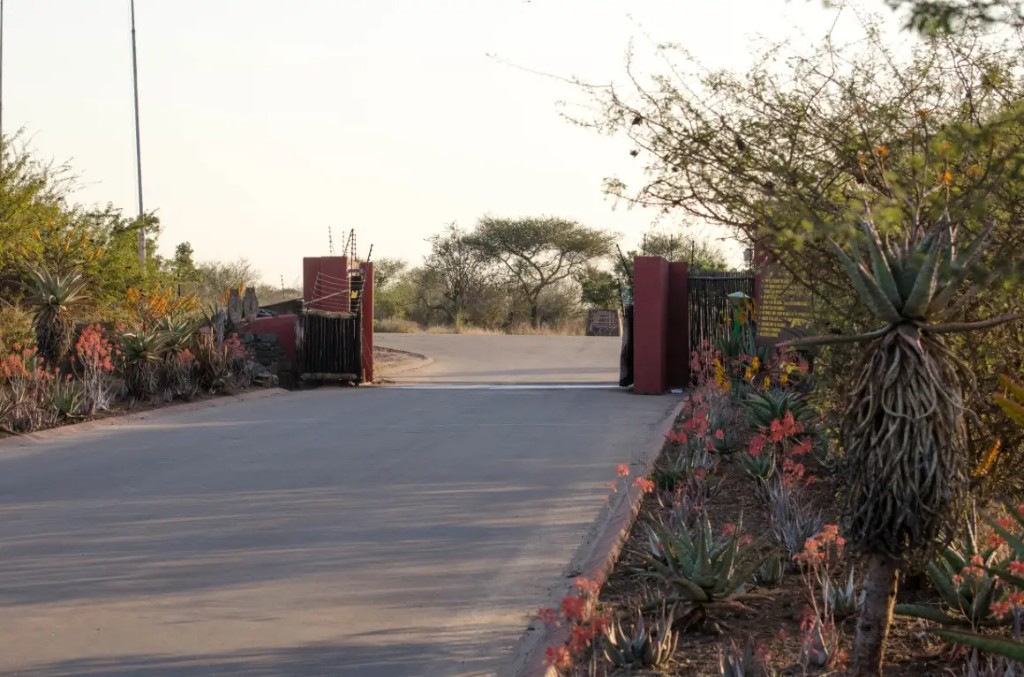
Kruger's gates open and close at fixed times that change with the seasons, and every self-driver must be inside a rest camp or out of the park before closing. This guide covers the monthly times, the difference between entrance and camp gates, what happens if you are late, and how to plan the last hour of every drive so you never race the dark.
The Golden Rule
Plan to be inside your camp, or through your exit gate, at least 30 minutes before official closing time.
Closing time is a hard deadline, not a target. Queues at the camp gate, a slow car at a sighting, a flat tyre or "just one more sighting" can easily eat 20 minutes. The 30-minute buffer is what turns those small surprises into non-events.
Monthly Gate Times
Kruger adjusts its opening and closing times month by month to follow sunrise and sunset. The park sits in the Southern Hemisphere, so the long days fall in summer (November to February) and the short days in winter (May to July). In midsummer the gates open at 05:30 and close at 18:30, giving you a 13-hour window. In midwinter they open at 06:00 and close at 17:30, which leaves only 11 and a half hours. That is an hour and a half less driving time per day in winter.
| Month | Gates open | Gates close |
|---|---|---|
| January | 05:30 | 18:30 |
| February | 05:30 | 18:30 |
| March | 05:30 | 18:00 |
| April | 06:00 | 18:00 |
| May | 06:00 | 17:30 |
| June | 06:00 | 17:30 |
| July | 06:00 | 17:30 |
| August | 06:00 | 18:00 |
| September | 06:00 | 18:00 |
| October | 05:30 | 18:00 |
| November | 05:30 | 18:30 |
| December | 05:30 | 18:30 |
These times apply to the main entrance gates and the rest camp gates. In the height of summer, published timetables show rest camp gates opening earlier than entrance gates (around 04:30 from November to January), which is a bonus if you are staying inside the park. Some border or remote gates, such as Pafuri and Giriyondo, keep different hours. Always confirm on the SANParks website or at reception before you travel, and see our Gates page for the current month.
The Kruger Companion app stores gate times offline, so you can check them in the bush without signal.
Entrance Gates vs Rest Camp Gates
There are two kinds of gates, and both matter for different reasons.
Park entrance gates are on the park boundary, for example Malelane, Paul Kruger, Phabeni, Orpen or Phalaborwa. Day visitors enter and leave through them, and overnight guests pass through them on arrival and departure. If you are a day visitor, your deadline is the closing time of the entrance gate you plan to exit from, so choose that gate before you set off, not at 16:30.
Rest camp gates are the fenced gates of the camps inside the park, such as Skukuza, Satara or Letaba. If you are staying overnight in the park, this is the gate you must be through before closing. The camp fence is what keeps you and the animals apart at night, so the camp gate is shut on time every evening.
The key point: closing time applies to all roads inside the park, not just the gates. You cannot drive between camps after closing, and there is no quick run to a neighbouring camp for dinner. Once the gate shuts, you must already be inside the camp you booked. The only legal way to be out after dark is on an official guided night drive.
What Happens If You Are Late?
SANParks treats late arrival as a serious rule violation, and the consequences depend on where you arrive late.
At entrance gates, SANParks states that latecomers will be refused entry. At a few southern gates (for example Paul Kruger, Malelane and Crocodile Bridge), a paid late-entry escort has been offered for guests with pre-booked accommodation at a camp close to that gate, but only in genuine emergencies, with proof of the reason, and only until 21:00. Phabeni, Phalaborwa and Pafuri do not offer late admission. Treat this as an emergency fallback, never as a plan, and check the current rules with SANParks if your arrival day looks tight.
At rest camps, SANParks states that late offenders will be warned and that repeat offenders will be fined. In practice you will usually have to explain yourself at the gate and fill in a late-arrival form. A genuine reason, such as a breakdown or a road blocked by elephants, is taken into account, but it does not change the rule.
The bigger risk is not the paperwork. It is what people do when they realise they are running late: they speed. Animals use the roads at dusk, many are dark-coloured and hard to see in fading light, and a collision at 60 km/h can kill the animal and wreck your car.
If you realise you will not make it in time, do not speed. Drive calmly to the nearest camp or gate, even if it is not your booked destination, and explain at reception. Our Emergency guide covers what to do if you break down or get stranded after closing.
Speed Limits vs Distances: Why Your Map Lies
The speed limits in Kruger are 50 km/h on tar roads and 40 km/h on gravel roads (see our park rules and 5 rules for self-driving). These are maximums, not averages, and this is where many first-time visitors get caught out.
On paper, 40 km on tar takes under an hour at 50 km/h. In reality you will stop for elephants crossing, slow down for a giraffe beside the road, queue at a lion sighting and pull over for photos. A realistic average on a game drive is closer to 20 to 30 km/h, and on gravel roads it can be lower still (our dirt roads guide explains why). That same 40 km can easily take 1.5 to 2 hours.
A simple rule of thumb that works well:
- Time to get back = distance to camp ÷ 25 km/h, then add your 30-minute buffer.
- 25 km from camp: about 1 hour of driving, so start heading back about 1.5 hours before closing.
- 50 km from camp: about 2 hours, so start heading back 2.5 hours before closing.
Regular navigation apps often show much shorter times because they assume normal road speeds, so trust your own calculation. Our Route planner and Trip planner help you keep loops realistic.
How to Plan the Last Hour of a Drive
Work backwards from closing time, not forwards from breakfast. Before every afternoon drive, decide on a "turn-around time" and tell everyone in the car. When that time comes, you turn around, whatever is around the next bend.
The last hour should be spent on roads that lead towards camp. Good sightings happen near camps too, and the final kilometres are often excellent: the light turns golden, predators start to move and animals come down to water. Pick a loop that ends with a waterhole or river road close to camp, so the best part of the drive is also the part that brings you home.
Example (June, gates close 17:30, you are 25 km from camp):
| Time | Action |
|---|---|
| 15:30 | Set your turn-around alarm and finish what you are watching |
| 16:00 | Turn around and start driving back towards camp |
| 16:30 | Only stop for sightings on the direct route, no detours or side loops |
| 17:00 | Arrive at camp gate (30-minute buffer intact) |
| 17:30 | Gates close |
Example (December, day visitor, gates close 18:30, you are 50 km from your exit gate):
| Time | Action |
|---|---|
| 16:00 | Turn around and head for the exit gate you chose in the morning |
| 17:30 | No more detours, only the direct route to the gate |
| 18:00 | Arrive at the exit gate (about 2 hours at 25 km/h, 30-minute buffer intact) |
| 18:30 | Gates close |
If you are far from camp, your afternoon ends much earlier than the closing time suggests. That is why long cross-park drives work best in the morning, with shorter loops near camp in the afternoon.
Check-Out Days and Moving Between Camps
Accommodation check-out is usually 10:00. You can still game-drive after check-out, but on that day your deadline is the closing time of your next camp or of your exit gate, so plan the route with the full distance in mind. Moving from the south to the north of the park in one day is a long drive at Kruger speeds, so break it up and leave time for sightings.
Pack the car the night before, top up fuel when you pass a camp (see fuel, shops and camp logistics) and do your morning drive in the direction of your next camp.
Day Visitors and Gate Quotas
Day visitors must leave the park through an entrance gate before closing time. During peak periods, such as school holidays, the festive season and long weekends, SANParks applies daily entry quotas at the gates, and once they are reached, more cars may be turned away. Booking your day visit online in advance is strongly recommended. Arriving at the gate when it opens also gives you the most time inside. See Fees and the Wild Card vs daily fees comparison for costs, and best gates by arrival to choose the right entrance.
Make the Most of the First Hour
The first hour after opening is often the most productive of the day: it is cool, predators may still be active after the night and animals move towards water. Be at the camp gate a few minutes before it opens, as the first cars out tend to have the roads to themselves.
Frequently Asked Questions
Do all Kruger gates open and close at the same time? Most main entrance gates and rest camp gates follow the same monthly timetable shown above. Some remote or border gates, such as Pafuri and Giriyondo, keep different hours, and in midsummer rest camp gates may open earlier than entrance gates. Check SANParks or reception for the gate you will use.
Can I drive to another camp for dinner and come back after dark? No. The closing time applies to every road in the park. After closing you must be inside the camp you booked, and the only way to be out after dark is on an official guided night drive.
What should I do if an elephant blocks the road and I will be late? Stay patient, keep a safe distance and never try to force your way past. Once the road is clear, drive to the nearest camp or gate at a safe speed and explain the delay at the gate.
Is the gate closing time the same as sunset? Not exactly. The times are set per month, roughly in line with sunset, so in some weeks it is still light at closing and in others dusk falls earlier. Do not use the sky as your clock, use the timetable.
Quick Checklist
- Know this month's opening and closing times (app or Gates page)
- Set a phone alarm for your turn-around time before each afternoon drive
- Calculate distance back at about 25 km/h, plus a 30-minute buffer
- Tell everyone in the car the plan before you leave
- On check-out day, pack before the morning drive and head towards your next camp
- If you are running late, drive calmly to the nearest camp or gate, never speed
Gate times are not the enemy of a great safari. Respect them, plan around them, and they let you relax and focus on what you came for: the animals.