Camping is the cheapest way to sleep inside Kruger, and for many regulars the best: you fall asleep to hyenas whooping beyond the fence and are through the camp gate the moment it opens. But not every camp has campsites, sites vary a lot in shade and power, and the January 2026 floods closed some of the most loved camping spots for months. This guide covers which camps you can camp in, what a site includes, how booking works, what to bring and how to keep the night visitors out of your food.
Which Kruger Camps Have Campsites
Most of the large rest camps have a camping area for tents, caravans and campers, plus a few smaller camps built mainly for camping. Several popular camps have no campsites at all.
| Camp | Region | Camping | Notes |
|---|---|---|---|
| Berg-en-Dal | South | Yes | Sites with power points |
| Malelane satellite camp | South | Yes | Small camp near Malelane Gate, no shop or restaurant |
| Crocodile Bridge | South | Yes | Small camp right at the gate |
| Pretoriuskop | South | Yes | Sites with power points |
| Skukuza | South | Yes | Largest camp, sites with power, can be busy and noisy |
| Lower Sabie | South | Yes | Sites with power, communal kitchens |
| Satara | Central | Yes | Sites with power, communal kitchens |
| Maroela | Central | Yes | Camping and caravans only, check in at Orpen |
| Balule | Central | Yes | Small rustic camp, no electricity, see flood note below |
| Letaba | North | Yes | Campsite reopened after the floods, see below |
| Tsendze | North | Yes | Rustic camp site near Mopani, about 30 sites, no power |
| Shingwedzi | North | Yes | Sites with power points |
| Punda Maria | Far north | Yes | Sites with and without power |
| Orpen, Olifants, Mopani | Central/North | No | Camp at Maroela, Balule or Tsendze instead |
| Bushveld camps, Tamboti | Various | No | Units or fixed safari tents only |
If you want to camp near Orpen, book Maroela. Near Olifants, the camping option is Balule, about 11 km south. Near Mopani, it is Tsendze, just south of the camp. Our bushveld camps guide explains why the five bushveld camps are a different category altogether.
Flood Update: What Was Closed in 2026
The January 2026 floods hit the central and northern camps hardest. For campers, the key points as of late 2026:
- Tsendze was closed after the floods and reopened on 2 February 2026.
- Shingwedzi reopened to overnight guests on 6 March 2026.
- Letaba: the campsite reopened for bookings on 6 July 2026 after fence and ablution repairs. Other parts of the camp reopened in stages, and SANParks said it expected the whole camp to be fully operational by about December 2026.
- Balule was badly damaged. In July 2026 SANParks expected it to reopen by the end of October, and reports in September said it was taking bookings again. Confirm before you plan around it.
- Maroela and Malelane stayed open to overnight guests through the January floods. A later SANParks update (May 2026) listed Maroela as temporarily closed, so check its current status before you book.
Repairs were still going on across the park in late 2026, and target dates moved several times during the year. Check the current status on sanparks.org, or with SANParks reservations, before you book, and again shortly before you travel.
What a Campsite Includes
A Kruger campsite is a marked stand inside the fenced camp: you bring the gear, SANParks provides the space and shared facilities.
People and vehicles. A site is usually priced for two people, with extra people charged on top, up to a maximum of six per site. The standard set-up is one tent or caravan (a side tent is fine), and your vehicle parks on the stand. Several small tents may share a site as long as you stay within six people. If your group is bigger, book two sites.
Power or no power. In the main rest camps most sites have a power point, but not all, so check what you are booking. Rustic sites at Tsendze and Balule have no electricity at all. Tsendze does not allow generators. Bring a long outdoor extension cable (20 to 30 m) with a waterproof plug for powered sites, because the nearest point may not be next to your tent.
Ablutions and kitchens. Every camping area has shared ablution blocks with hot showers, and most have communal kitchens or sculleries with sinks and, in many camps, hotplates. Utensils, crockery and cutlery are not provided. Each site normally has a braai stand. Tsendze runs on solar lighting and gas, with shared gas freezers; Balule has only a small communal freezer.
Shade and the fence. Shade varies more than anything else. Some camps have big, old trees over most sites; others, Shingwedzi for example, are open and dry, and a midsummer afternoon in full sun is brutal. The most sought-after sites are along the perimeter fence, where you may watch animals pass at dusk or dawn from your camp chair.
How Booking Works
Book through the SANParks online booking system or SANParks Central Reservations, like any other unit. Bookings open about 11 months ahead; our step-by-step booking guide walks you through it.
A few camping-specific points:
- You book a site type, not a site number. In most camps the stands are allocated, or chosen first come, first served, when you check in. You can request a specific stand, for example a fence site, but it is not guaranteed. Arrive earlier in the day and you have more choice.
- Book the right type. Powered and unpowered sites are listed separately where both exist.
- Peak periods sell out. South African school holidays, Easter, long weekends and the December holidays are when campsites in the south fill up. Outside those dates, especially in the north, short-notice sites are often available.
- Check in at the right place. Maroela guests check in at Orpen, Tsendze guests at Mopani. Balule guests check in at Olifants or Satara, as the camp has no reception of its own.
What Camping Costs
You pay two things: the site fee, per site per night, and conservation fees, per person per day, unless you hold a valid Wild Card.
Site fees are priced for two people with a charge for each extra person. They vary by camp, by season (the December holidays and some other periods cost more) and by site type. SANParks prices change on 1 November each year, so look up the current rates in the booking system rather than relying on older figures. Our fees page has the current conservation fees, and Wild Card vs daily fees shows when the card pays off on a longer camping trip.
Tents: Bring Your Own or Rent
Bring your own if you live in South Africa or are on a road trip. In summer, good ventilation and a proper rain fly are essential.
Rooftop tents are very popular in Kruger: quick to set up, off the ground and easy to move each night. Many rental vehicles in South Africa come with a rooftop tent and camping kit. Make sure your vehicle's roof is rated for the tent, and remember you have to pack the tent away every time you go for a drive.
Rent locally if you are flying in. Several businesses in the Lowveld hire out tents and camping gear for Kruger trips. One of them, Lowveld Tent Rentals in White River (a Kruger Companion partner), hands over bush-ready gear at Kruger Mpumalanga International Airport (KMIA), so you can fly in and drive straight to your campsite. Check what is included and practise the set-up before you head for the gate.
Camping Gear Checklist
- Tent with rain fly, groundsheet, pegs and a mallet (the ground can be hard)
- Sleeping bags rated for the season, pillows, mattresses or stretchers
- Camp chairs and a folding table
- Head torch plus a lantern, with spare batteries or a charged power bank
- Outdoor extension cable and multi-plug for powered sites
- Cooler box or 12 V fridge, and sealable containers for all food
- Gas stove, pots, crockery, cutlery, washing-up kit, braai grid and tongs
- Water containers
- Insect repellent and, where advised, malaria precautions (see our malaria page)
- A warm jacket and beanie in winter, rain gear in summer
Buy most of your food and supplies before you enter: fuel, shops and camp logistics explains what camp shops stock and when they close. The packing list in the planner helps you tick things off.
Wildlife at the Fence: Secure Your Food
Camp fences keep the big animals out, but the clever small ones live with you. Feeding any animal is against park rules.
- Spotted hyenas patrol the fence lines at night, attracted by the smell of braai meat. Never throw bones or scraps over the fence.
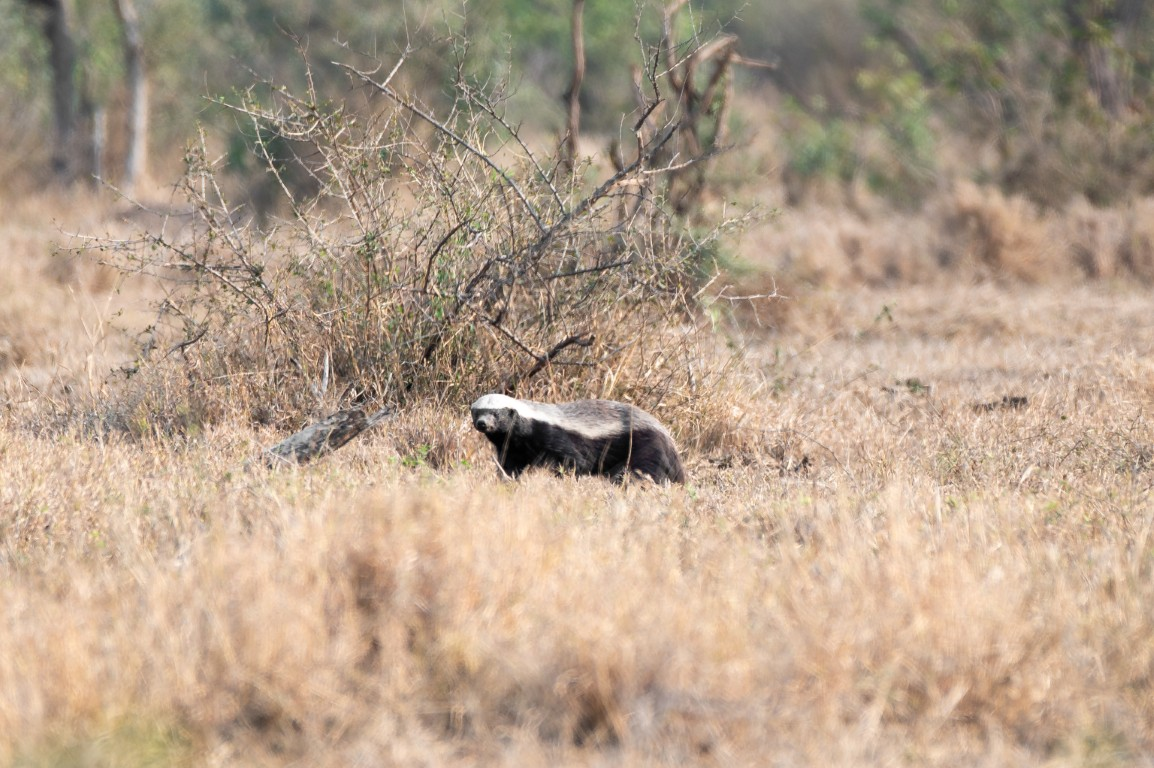
- Honey badgers are strong, determined and known for raiding bins, cooler boxes and even fridges in some camps. Never leave food or rubbish outside overnight, and use the bins provided. Keep the cooler box locked in your car.
- Vervet monkeys and baboons raid by day. They grab food from tables, open unzipped tents and unlocked car doors. Zip the tent, close the car and pack food away whenever you leave the site, even for a few minutes.
Take a head torch and wear closed shoes when you walk to the ablutions after dark.
Weather by Season
Summer (about October to March). Hot days, often 30 to 35°C, and warm nights. Short, violent afternoon thunderstorms with lightning and heavy rain are common. Pitch on slightly raised ground, tension your fly well, keep electrics off the ground and pick a shady site. Avoid camping under a single large tree in a storm with dead branches.
Winter (about May to September). Dry, sunny days around 26 to 28°C, but cold nights. At Skukuza, June and July minimums average about 6°C, and occasional sub-zero mornings have been recorded. A warm sleeping bag matters more than a big tent.
April and late September are often the most comfortable months for camping. See Kruger weather month by month for details.
Best Camps for Camping, and Why
Tsendze. Many regulars' favourite. It is small, quiet and rustic, with big trees shading the sites, no generators and some stands near the fence. You need to be self-sufficient, with Mopani a short drive away for fuel and the shop.
Balule. A tiny camp near the Olifants River, with no electricity and a few fence sites that look towards the river.
Punda Maria. In the quiet far north, with sites along the fence and a sandveld setting unlike anywhere else in the park. Pair it with a few nights at Shingwedzi.
Satara. Not quiet, but it puts you on the central plains, among the best general game and predator country in Kruger, and the camping area has full facilities.
Maroela. A camping-only camp in the Timbavati area near Orpen. Quieter than the main camps, with communal kitchens and good access to the central-western roads.
Lower Sabie and Pretoriuskop. Full-service southern camps for a comfortable first camping trip. Book Lower Sabie early.
If you prefer peace, avoid Skukuza in busy periods: it is the biggest camp, with traffic and activity late into the evening. Compare all the camps on our Camps page. The Kruger Companion app shows camp facilities and gate times offline, which helps when you are working out how far you can get before the camp closes.
Frequently Asked Questions
Can I camp anywhere in Kruger? No. You may only camp on booked sites inside fenced camps. Sleeping in your car or outside a camp is not allowed, and you must be inside your camp before the gate closes. See our gate times.
How many people can share one campsite? A site is priced for two people and usually takes a maximum of six, with extra people charged per person. For larger groups, book a second site.
Can I choose a fence site when I book? Usually not. You book a type of site, and the stand is allocated or chosen at check-in. Requests are sometimes honoured, but arriving earlier gives you the best chance.
Do all campsites have electricity? No. Most sites in the main rest camps have a power point, but Tsendze and Balule have none, and some camps mix powered and unpowered sites. Check the site type when you book.
Is it safe to camp in Kruger? Yes, if you follow the rules. The camps are fenced, and the main risks are animals stealing food, insects, heat and storms. Secure food, zip your tent and never feed or approach animals.